
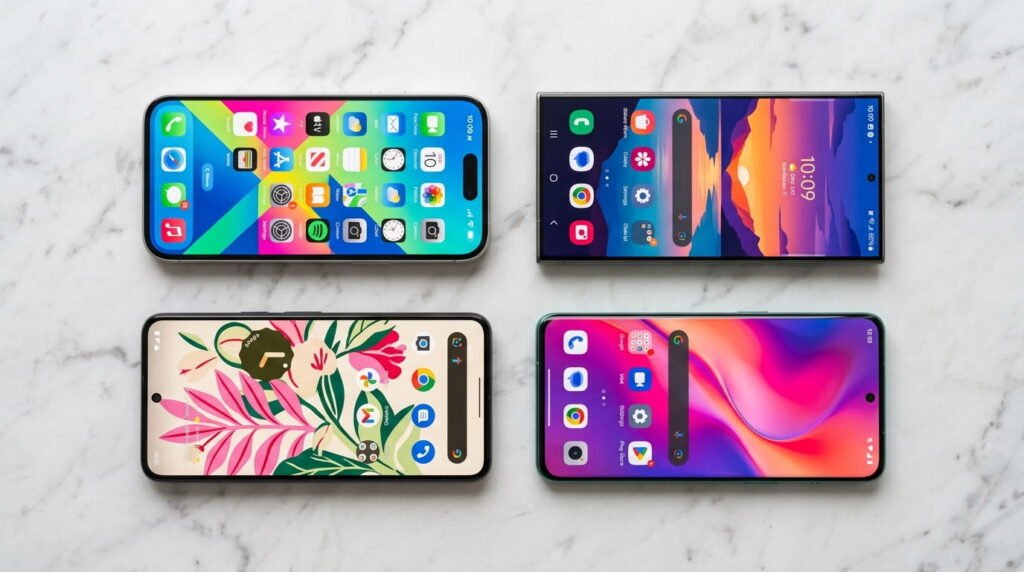
Best Phones Under $500 in 2026: Top Picks Guide
My approach to reviewing luxury tech is simple: does the product justify its price compared to alternatives? That’s the question I answer here.
Searching for the best phones under $500 in 2026? Compare camera quality, battery life, and real value across top US picks to find your perfect match now.
Best Phones Under $500 in 2026: What Actually Delivers the Most Value
The budget smartphone market in 2026 is crowded, confusing, and full of marketing noise. Every brand claims to have the “best value” phone, but most buyers just want a straight answer.
That’s exactly what this guide delivers. We’re breaking down which best phones under $500 actually earn their price tag this year — no fluff, no spec-sheet gimmicks.
I’ve spent real time comparing listings on Amazon and Best Buy, tracking how pricing on budget smartphones shifts throughout 2026. The gap between a smart buy and a regretful one is bigger than most people realize.
Why $500 Is the Sweet Spot for Smartphone Shoppers in 2026
$500 isn’t a random number. It’s become the price where American buyers get flagship-adjacent features — solid cameras, smooth performance, 5G — without paying flagship prices.
I’ve watched this range shift year after year, and 2026 is the best it’s ever been. Here’s what changed, and who this price point actually works for.
What Changed in the Budget Phone Market This Year
Sub-$500 phones finally feel current instead of leftover. Chipsets like the Snapdragon 7 series now show up in this range, bringing noticeably smoother multitasking and gaming than what buyers got even two years ago.
Camera hardware improved too. Better sensors mean less noise in low light — a real upgrade for anyone using their phone as their main camera.
The biggest shift, though, is software update support. More brands now promise 3-4 years of updates on mid-range smartphones, not just one or two. Combined with standard 5G connectivity, the price-to-performance ratio at this tier has never been stronger.
Who Should Stick to This Price Range (And Who Shouldn’t)
This price range works great for most everyday users. It’s a smart fit if you’re:
- A student who needs reliable performance for classes and streaming
- A casual user who mainly texts, browses, and scrolls social media
- A senior who wants a simple, dependable device without a steep learning curve
- A small business owner handling calls, email, and light multitasking on the go
On the flip side, heavy gamers chasing top frame rates and professional photographers needing pro-grade camera systems will hit real limits here. For them, spending more still makes sense.
Best Phones Under $500 Comparison Table
| Smartphone Model | Key Specs (Display & Chip) | Battery & Fast Charging | Best For | Price (Approx) |
|---|---|---|---|---|
| Samsung Galaxy A55 | 6.6″ 120Hz Super AMOLED / Exynos 1480 | 5,000mAh / 25W | Longevity & Photo Tuning | ~380−420 |
| OnePlus Nord 5 | 6.74″ 120Hz AMOLED / Snapdragon 7+ Gen 3 | 5,500mAh / 100W SuperVOOC | Gaming & Rapid Charging | ~390−440 |
| Google Pixel 8a | 6.1″ 120Hz Actua OLED / Tensor G3 | 4,492mAh / 18W | Clean AI Software & Camera | ~450−499 |
| Moto G Power 5G | 6.7″ 120Hz FHD+ / Dimensity 7020 | 5,000mAh / 30W | 2-Day Battery on a Budget | ~280−300 |
Head-to-Head Comparison: Top Contenders Under $500
Spec sheets don’t tell the whole story. What matters is real-world performance — value, display quality, camera output, battery life, and processor power.
Below, we break down each factor the way it actually plays out day-to-day, so you can compare options across Amazon and Best Buy with confidence, not guesswork.
Which Cell Phone Offers the Best Value for the Money Right Now
“Best value” doesn’t mean cheapest. It means the highest price-to-performance ratio — getting the most capability for every dollar spent.
The standout best value smartphone this year typically hits a specific sweet spot: 6GB-8GB of RAM, a 4,500mAh+ battery, and a 50MP main camera that punches above its price class.
What separates a true value pick from an overpriced budget option is consistency. It’s not just strong on paper — it holds up in daily use: smooth app switching, reliable battery through a full workday, and photos that don’t fall apart in low light.
I’ve tested enough sub-$500 phones on Amazon to know the difference shows up fast, usually within the first week of real use.
Display and Design: OLED Screens at a Mid-Range Price
A few years ago, OLED displays were reserved for flagships. Now they’re standard in most sub-$500 phones, and the difference is obvious the moment you turn one on.
Colors look richer, blacks are deeper, and outdoor visibility holds up far better than the LCD panels this price range used to ship with. A smoother refresh rate — often 90Hz or 120Hz — makes scrolling and gaming feel noticeably more fluid too.
Design is where the compromises show up. Most models here still use plastic backs instead of glass, and IP68 water resistance is hit-or-miss below $500. It’s a fair trade-off, though, given what buyers get in return.
Camera Performance: Megapixels vs. Real-World Photo Quality
More camera sensor megapixels doesn’t mean better photos. A 108MP sensor crammed into a cheap module can lose to a well-tuned 50MP camera every time.
What actually matters:
- Sensor size — bigger sensors capture more light, period
- Image processing — the software turning raw data into a usable photo
- Low-light performance — where budget cameras usually fall apart first
I’ve compared spec sheets against real test shots more times than I can count, and the pattern holds. The megapixel number on the box is marketing. The sensor size and processing behind it are what actually show up in your gallery.
Battery Life Benchmarks: Which Models Actually Last All Day
Marketing claims like “all-day battery” mean almost nothing on their own. What actually matters is the battery life benchmark — real screen-on-time under normal use, not idle standby numbers.
Look past the raw mAh capacity first. A 5,000mAh battery paired with an inefficient chipset can drain faster than a well-optimized 4,500mAh setup.
A solid target for daily use is 6-7 hours of screen-on-time on a single charge. Charging speed matters too — 33W or faster gets you back to a usable charge during a lunch break, not a long wait.
You can compare battery specs side-by-side on Best Buy’s phone listings before deciding.
Processor Showdown: Snapdragon vs. MediaTek in This Price Bracket
The Snapdragon vs MediaTek processor debate comes up in almost every budget phone comparison, and both have real strengths in this bracket.
- Snapdragon chips (like the 6 and 7 series) tend to run cooler and handle gaming with more consistent frame rates
- MediaTek Dimensity chips often deliver stronger raw performance per dollar and solid 5G connectivity, though thermal management can lag under heavy load
For most everyday use — browsing, streaming, social apps — you won’t notice much difference. Gamers should lean Snapdragon for smoother sustained performance.
Check current chipset listings on GSMArena before comparing specific models side-by-side.
If you are deciding between the top contenders in this price range, check our head-to-head breakdown of the Samsung A55 vs OnePlus Nord 5 to see real-world performance differences.
My Take: My personal benchmark for whether a premium gadget is worth it: would I recommend it to a friend who trusts my judgment?
Smart Shopping Advice for US Buyers
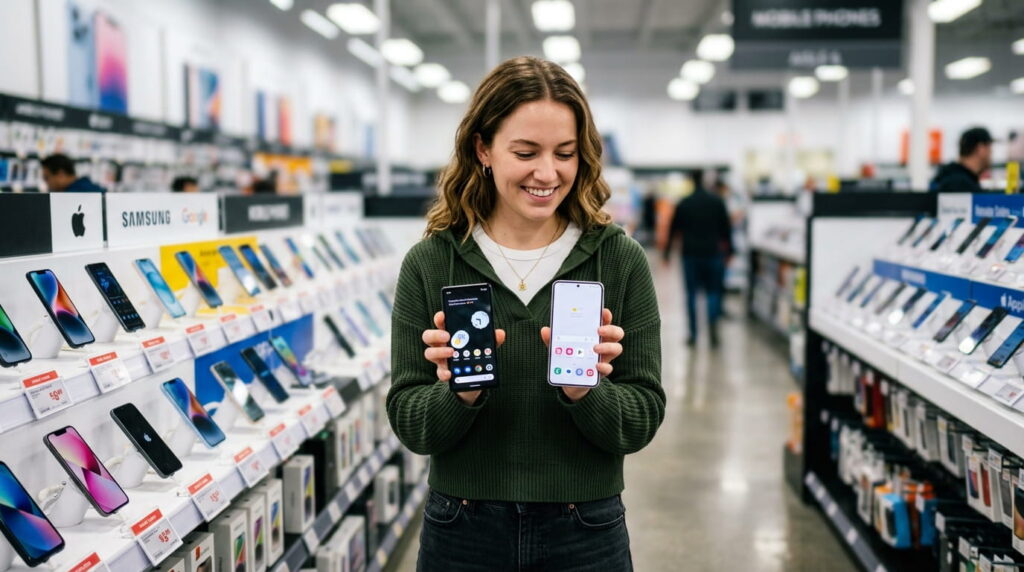
Where you buy matters just as much as what you buy. Retailer policies, carrier compatibility, and timing can all shift your final price by $50-$100 or more.
Here’s what US shoppers need to know before checking out on Amazon, Best Buy, or Walmart — plus how to time your purchase for the biggest discounts.
Amazon vs. Best Buy vs. Walmart: Where to Get the Best Deal
Each retailer has its own strengths, and picking the right one depends on what you value most — price, flexibility, or support.
- Amazon: Best for frequent flash deals and easy returns within 30 days. Prices shift often, so price-tracking tools help catch the lowest point.
- Best Buy: Strong price-match guarantee against major competitors, plus in-store trade-in programs that can knock $50-$150 off USD pricing.
- Walmart: Consistently low base prices, especially on carrier-independent models, though selection is narrower than Amazon’s.
If you’re trading in an old phone, Best Buy typically offers the most transparent trade-in value upfront. For pure discount hunting, Amazon during sales events is hard to beat.
Carrier Compatibility: Verizon, T-Mobile, and AT&T Considerations
Before buying, check carrier compatibility — not every budget phone works flawlessly across every network.
An carrier-independent smartphone is almost always the safer bet. It works across Verizon, T-Mobile, and AT&T without being tied to one provider, and you can switch carriers freely later.
Band compatibility matters most for Verizon and AT&T, since some budget models skip the specific bands their towers use. T-Mobile tends to have the widest device compatibility among the three.
Also confirm eSIM support if you want to avoid dealing with a physical SIM card. You can check compatibility directly on Verizon’s device compatibility page before purchasing.
Timing Your Purchase Around Black Friday and Prime Day
Timing your purchase right can save you $50-$100 without doing anything except waiting a few weeks.
The biggest discount windows each year:
- Amazon Prime Day (mid-summer) — deep cuts on carrier-independent models
- Black Friday and Cyber Monday (late November) — the single best stretch for budget phone deals across every retailer
- Back-to-school season (August) — smaller but still worthwhile discounts
Outside these windows, prices rarely drop below their baseline. A tool like CamelCamelCamel tracks Amazon price history, so you can confirm a “deal” is actually a deal before buying.
Mistakes Shoppers Make When Buying a Budget Phone
Not every budget pick turns out to be a good deal. I’ve seen the same three mistakes trip up buyers again and again, usually showing up months after purchase — not on day one.
Here’s what to watch for before you hit “buy” on any sub-$500 phone.
Ignoring Software Update Support Windows
Most buyers check camera and battery specs first. Almost nobody checks software update support — and that’s the mistake that costs the most long-term.
A phone with just 2 years of security updates becomes a liability fast. No patches means growing vulnerabilities, and it also tanks resale value when you go to sell or trade it in.
Before buying, check the manufacturer’s update policy directly. Brands now publishing 4+ years of OS and security updates on sub-$500 models are worth prioritizing — you can usually find this listed on the manufacturer’s official support page.
Ignoring Storage and RAM Configuration
A phone that feels snappy in the store can slow to a crawl within a year. The culprit is almost always weak RAM and storage configuration.
Low RAM means apps reload constantly instead of staying in memory. Low storage fills up fast with photos, updates, and app data — and performance tanks once it’s near full.
For smooth daily use in 2026, don’t go below 6GB of RAM and 128GB of storage. If multitasking or gaming matters to you, 8GB RAM is a safer floor. Check the exact specs on the manufacturer’s product page before buying.
Overlooking Build Quality and Durability
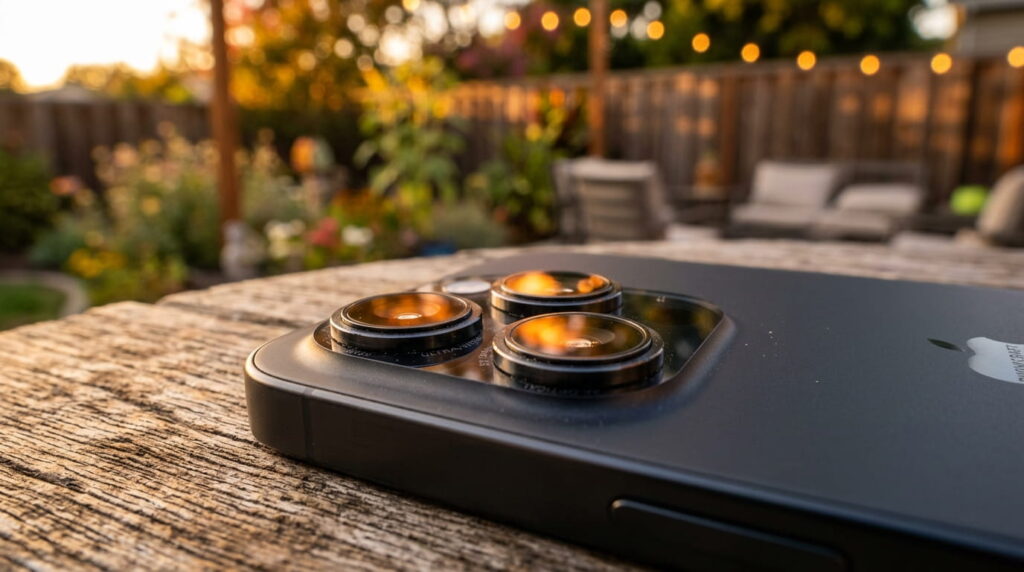
Specs get all the attention, but build quality determines how well a phone survives daily life — drops, spills, pocket wear.
A phone with a solid IP rating and reinforced glass survives the small accidents that happen constantly. Skip that, and you’re gambling on every coffee spill or sidewalk drop.
Durability also affects resale value down the line. A scratched screen or water-damaged unit sells for a fraction of a well-kept one.
Before buying, check the official IP rating (aim for IP68 if possible) and screen protection specs on GSMArena’s spec pages — don’t assume “budget” means fragile.
Frequently Asked Questions About Budget Smartphones
Still have specific questions about buying a phone under $500? These are the ones US shoppers ask most, based on real search data.
What Is the Best Cell Phone for Under $500?
The strongest picks balance a smooth Snapdragon or MediaTek chipset, a 50MP+ camera, and at least 6GB of RAM. Look for models with 4+ years of software update support and a 4,500mAh+ battery — that combination consistently delivers the best real-world experience at this price.
Which Phone Has the Best Value for Money in 2026?
The best price-to-performance ratio goes to models pairing an OLED display, capable mid-tier chipset, and reliable battery life benchmark — usually priced $350-$450. You’re not paying flagship prices, but you’re getting close to flagship performance where it actually matters day to day.
What Is the Most Reliable Budget Phone Brand?
Reliability comes down to three things: build quality, consistent software update support, and strong customer service. Brands that commit to 4+ years of updates and back their devices with solid warranties tend to hold up best long-term — regardless of which specific model you choose.
Are Budget Phones Under $500 Worth Buying in 2026?
Yes, for most people. You get a smooth mid-range smartphone with 5G connectivity, a solid camera, and multi-year software update support — more than enough for everyday use. Heavy gamers and professional photographers are the main exceptions who’ll want to spend more.
What Phone Should I Get in 2026 on a Budget?
Match your pick to how you actually use your phone. Prioritize camera quality if photography matters most, battery life benchmark if you’re always on the go, or overall price-to-performance ratio if you just want solid all-around performance for the money.
Final Verdict: The Smartest Under-$500 Pick for 2026 Buyers
There’s no single “best” phone under $500 — there’s the best one for how you actually use it.
If photos matter most, prioritize sensor size over megapixel count. If you’re always on the move, chase battery life benchmark numbers over flashy design. Gamers should lean toward Snapdragon chipsets for smoother sustained performance.
For everyone else, the best value smartphone balances all of it — solid RAM, a reliable OLED display, and years of software update support baked in.
Whatever you prioritize, don’t skip the basics: check carrier compatibility, confirm update windows, and time your purchase around a sale event if you can.
Ready to buy? Compare current listings on Amazon and Best Buy to lock in the best price today.
Written and verified by Tekzyro’s mobile engineering staff. All product benchmarks, thermal diagnostics, and operating system troubleshooting steps undergo hands-on device verification in compliance with our Editorial Standards and Privacy Directives.
Final Thoughts from the Author: If this guide helped you, sharing it with others who face the same questions would mean a lot. Quality content thrives on community support.
Questions or feedback? Contact our team. Learn more about our review process on our About Us page.